November 11, 2011

Advice to Young Poets


Poetry is something that is often badly taught or at least badly introduced when we are in high school by teachers who are not really passionate about such writing, and who use sterile and impersonal teachers’ editions that can reduce any writing to mere mechanics through questions that offer only expectations of correct or incorrect responses as though in a math class.

The magic of poetry is that it is not just an intellectual experience but a sensory one and also one that defies definition or categorization.  Poetry is the most distilled form of language that we have, because the words on the page become so much more in combination than they can be individually.  The words together have ripples of meaning that spread as if from a stone being dropped into a pond, the waves traveling outward until they reach some kind of shore.  The words become empowered by the reader’s experience coupled with that of the poet.  Marcel Proust once described a little Asian game of dropping tightly folded pieces of colored rice paper into a large bowl of water and then watching the papers open as they absorbed the liquid and became fanciful shapes that the observers could describe in terms of their own imaginations.  Poetry is like that, because it is language that is so concentrated, that it opens like some fantastic flower in the reader’s mind.

Teenagers sometimes write love poems (which they pronounce POMES) they feel must rhyme and also flow like pancake syrup.  I don’t know where along the way this happens (libido?), but I find that younger children are often much better poets, because they have not yet been initiated into common expectations to which the rest of us cling so tightly .  Finding one’s true voice is perhaps too rare an accomplishment in a world in which we are bombarded daily by media voices telling us what is beautiful, what is not, what to buy, what to think, and who to be.  Poetry with all other creative writing helps us to find our way a little better through what Rupert Brooke called, “The pain, the calm, and the astonishment, desire, illimitable.”

There is a little poem by a six-year old English girl:

     The sky was black slate,
     The stars were three-penny bits,
     And the sea made a sound like a silk dress.

That little verse shows someone observant of the physical world, in touch with her senses.  Her poem is the real thing.  Perhaps the beginning of all creative writing is that we see old things in new and different ways, and that fresh view of the world is what writers try, at least subconsciously, to recapture.  Children already have the capacity to see the world freshly, but that capacity is somehow generally lost or dulled along the way.  Developing whatever gifts writers have means to some extent finding again that ability to see the significances of everyday things.

There are no wasted words in poetry, no words that are not absolutely needed.  There is also the need for the words to sound “right.”  Sound is as important as meaning, because poetry is a kind of music. If one is writing about the pain of saying goodbye, he doesn’t depend just upon the literal combinations of words by saying merely, “Goodbyes are sad.”  He uses metaphorical language to express what that pain may be like in terms the reader can feel more powerfully. He may use simile to say, “Goodbyes are like kitchen smoke after a burnt dinner,” or “Goodbyes are the last bubbles of Champagne going flat.”  The abstraction of emotion is then tied to the physical world of experience that we can share with immediacy.  Children are especially good at this immediacy.

I now leave the reader with a poem of mine about what it’s like to feel alone.

                JOURNEY

The world is an airport
of hearts that have taken flight
on invisible journeys
made alone
over countless runways.

To meet, even in the same room,
hearts sometimes travel
prairies, glaciers, tundras and jungles,
living, when injured,
on cocktails and peanuts along the way.

Wounds are dressed (sometimes in formal wear)
and black ink
stitched in healing whispers
across the pale white skin
of love letters...

until tonight,
when the phone is silent,
windows sweat messages
in trickles of rain,
and outside
         umbrellas open,
            like wings.

                  JB

November 9, 2011

The Doctor Will See You Now: a dark little one-act by John Bolinger

 THE DOCTOR WILL SEE YOU 
 NOW 


Scene: Doctor’s reception room in which there are a sofa, several upholstered chairs, a coffee table with magazines fanned over the top, a potted plastic palm, and on the wall a large print of “The Laughing Cavalier” by Franz Hals.  Soft “muzak” plays in the background.  A man sitting in the corner looks up from his copy of POPULAR MECHANICS when a nurse enters the room. The year is 1975.

Nurse:  The doctor will see you now, Mr. Hampton. (The man goes toward the door and suddenly turns around to return the magazine to the area where he had been reading and then enters an examination room).

(Still in the waiting area are two middle-aged women, one wearing a feathered hat and the other woman a red silk scarf around her neck.  The first lady is reading VOGUE, and the other is smiling at a photo she has taken from her open purse.  She chuckles audibly).

Louise:  (Looking up because Clara has laughed)  Is that your son?

Clara:  No.  It’s my husband, but this is an old picture taken before we were married when he was beginning his plumbing apprenticeship.  (She closes her eyes and looks meditative.)  It’s funny how much faces change over the years, isn’t it? (Smiles again, looking down at the photo).  My, but 1940 was a good year.

Louise:  Yes, but my husband  thinks he looks the way he looked thirty-five years ago.  I don’t think men see themselves aging as we women see ourselves.  Charles is laboring under the illusion that time has simply passed him by.  He still exerts himself on the golf course as though he were twenty.  I’m waiting for a stroke to surprise him in the middle of the 18th hole, and I don’t mean the stroke of a golf ball.

Clara (sobbing):  I know what you mean.  You can never tell when such a tragedy will strike.  Len was perfectly healthy until (sobbing again)...the accident.

Louise: Accident?

mayonnaise
Clara:  Yes, you see, Len suffered an attack of ptomaine poisoning from some tuna salad I made for a formal we went to at the United Nations Pool Hall last June.  It was so warm, and I think the mayonnaise I made spoiled or something during those three or four hours. A toxicologist said it was the raw eggs in the dressing. Anyway, it was quite a bad case of poisoning, and the doctors said that during the trauma, Len had suffered brain damage.  I mean, can you imagine?  Brain damage from tuna salad?  (She weeps again.)

Louise:  I’m so sorry.  Is there any chance that he’ll recover?

Clara:  I’m afraid not.  Once the cells are destroyed, that’s the end of them.  Now he just sits in front of the TV drinking Ovaltine with a straw from a Mr. Spock space mug.  He’s a vegetable.

Louise:  How awful for you!

Clara:  Well, I suppose it can’t be helped now, except to keep him as comfortable as I can.  What does YOUR husband do?

Louise:  Very little, I assure you.  Golf seems to be the only activity in his life that stimulates him in any way.  Because he’s in his "middle" years, you know, male menopause and all that, he’s trying to prove to everyone, including himself, that he’s Tarzan of the jungle.  

Clara:  And was he Tarzan once (laughing)?

Louise:  Never.  But I loved him.  Tarzan never did the things George used to do.

Clara:  Like what?

Louise:  When he was in the Air Force during the war, he would send me stuffed toys.  You know, Teddy bears, stuffed rabbits and dogs...those sorts of things.  One Christmas he sent me some glass tree ornaments from England that were all broken when they arrived.  I still have the pieces in an old cigar box and have always wondered what they must have looked like in 1942.  The stuffed toys are long gone.  You know how kids are.  They destroyed everything before they were even old enough to go to school.

Clara: Then you have children?

Louise:  Jason is 34, Barbara 29, and Ben 27.

Clara:  Len and I never had children, unless you count a couple of miscarriages.  Do your children live near you?

Louise:  You might say so.  In fact, Jason lives with us and on us.  He’s very shiftless.  He pretends to repair electric typewriters, but the same machine has been on his work bench in the basement since last April.  Ben is in law school but will probably become an embezzler in the end, and Barbara is working on her second marriage somewhere in Kansas.  We all live very separate lives and rarely see one another except for the occasional Christmas or funeral.

Clara:  All the same, you do have a family.

Louise:  If that’s what you call it.  We’re not exactly the Waltons.  

(The nurse enters.) 

Nurse:  The doctor will see you now, Mrs. Walker.

Clara:  Thank you.  (She turns toward Louise).  I’m sorry.  I don’t even know your name.

Louise:  Louise Carter.  And yours?      

Clara:  Clara Walker.  It was good talking to you. (She goes into the next room as Mr. Hampton exits.)

Louise:  (Alone now in the waiting room, she picks up a magazine and begins flipping through it and smiling slyly as she speaks aloud to herself)
Tuna salad with plenty of mayo in a warm room for about three hours.  My, but 1976 is going to be a good year.  

(The muzak gets louder as the lights fade except for one on the picture of the Laughing Cavalier)

                                                                                       The End 

November 8, 2011

Why Blog?

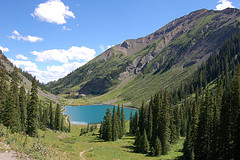
a favorite lake
SOME THOUGHTS ON BLOGGING

This morning I was thinking about blogging and why I or anyone else would continue to post information, ideas, hopes, and dreams into what the writer Armistead Maupin called “the void, into the grey ether of faceless strangers.”  I suppose that one reason I continue to blog is that it is an incentive to organize and express my thoughts almost on a daily basis. Maybe it’s my way of postponing Alzheimer’s. My friends are always in mind when I’m writing, though I don’t express my views based upon their comfort zones, or anyone else’s.  People send prayers based upon faith that those prayers will land somewhere and be heard and in hope that they will be answered in time.  In a way blogging for me is like that.  Each day I imagine someone reading what I write and either agreeing or being stimulated to disagree.  Sometimes I envision people reading what I’ve written and saying things like, “Ah yes, he’s right on the money about that,” or perhaps, “This guy is completely nuts!”  Either way, I am heard.

Ego certainly has a hand in my writing and probably in that of most other writers.  As I never had children, there is usually an unspoken desire that I leave something behind to be considered after I’m gone.  Though not a consistently conscious reflection, it is, I believe, often just under the surface of my efforts to leave behind something well written.  In that respect, the two books of mine that have been published bring me comfort on some level, and working on the next two books gives me a continuing creative purpose.

In the Middle Ages, even monks had the desire to leave some of their own thoughts behind in writing.  Though monks were often scribes copying sacred texts in breathtaking illuminated manuscripts, many also wrote little notes in the margins about their personal views on earth and heaven.  In 1953 the American composer, Samuel Barber (1910-1981) compiled ten such improvisational texts by Irish monks from the 8th to the 13th Century in translation and created a song cycle from them.  One is about a monk and his cat, each pursuing his purpose, one immersed in study, the other preoccupied with catching mice.  In another, called “The Heavenly Banquet,” the monk scribbled in the manuscript margin that he hoped to see in heaven the Virgin Mary and the Holy Family ‘round a great lake of beer.  I’m not sure that he ever really expected to be read and remembered for that verbal image, but he felt a compulsion to express it on paper, nonetheless.  That “compulsion” goes back even further to those who carved messages in stone or pressed them into clay tablets.  Maybe they too were “blogging.”  Those who tell their stories to bartenders or to grandchildren are perhaps satisfying the same need to share their experiences and views. 

People who feel the need to text daily, to e-mail, to create graffiti, are all “bloggers” of different sorts.  Again, it all goes back to the need to communicate, which is a very human pursuit.  For perhaps the first time in history, we are all able to share our thoughts with hundreds or even thousands of others at once without having to be on the radio or on television.  There is, therefore, all the more reason for us to refine or distill our thoughts in writing in order to express something in the best ways we can, whether for sheer entertainment or enlightenment, which often overlap anyway.

JB

November 7, 2011

Recipes: Apricot Chutney, Golden Beet Salad, Baked Salmon with Cranberry Crust

Here are some recipes to inspire you, as you plan for your Thanksgiving feasts.

Apricot Chutney
 -- makes a nice gift
  
       6 cups  FRESH APRICOTS, pitted
       4 medium ONIONS, sliced
   1 1/8 c  SEEDLESS RAISINS
   2 1/2 c  WHITE WINE VINEGAR
       1 lb DARK BROWN SUGAR
       4 tbs SALT
       1 c  PRESERVED GINGER
       1 tbs MUSTARD SEEDS
       1 tsp CAYENNE PEPPER
     1/2 ts GROUND TURMERIC
       1    ORANGE, the peel grated and the juice strained
     1/2 c  WALNUTS
  
   Put all of the ingredients into a large pan and cook gently to a soft mush,
   about 1-1/2 hours.
   
   Add the walnuts.  Pack into sterilized jars.
                                                                                                                                              
    Golden Beet Salad


 3 large red beets (1 2/3 lb without greens)
2 large golden beets (1 lb without greens)
1/4 cup minced shallot
2 tablespoons fresh lemon juice
3/4 teaspoon salt
1/4 teaspoon black pepper
1/4 cup pistachio oil
4 oz soft mild goat cheese
3 tablespoons salted shelled pistachios (not dyed red), coarsely chopped
1 oz mâche (also called lamb's lettuce), trimmed (4 cups)

Special equipment: a 2 1/2-inch round cookie cutter (without handle; at least 2 inches high)
Preparation
Preheat oven to 425°F.

Separately wrap red and golden beets tightly in double layers of foil and roast in middle of oven until tender, 1 to 1 1/2 hours. Unwrap beets.

While beets are cooling slightly, whisk together shallot, lemon juice, salt, and pepper in a small bowl, then add oil in a stream, whisking.

When beets are cool enough to handle, slip off and discard skins. Separately cut red and golden beets into 1/4-inch dice and put in separate bowls. Add 2 1/2 tablespoons dressing to each bowl and toss to coat.

Place cookie cutter in center of 1 of 8 salad plates. Put one eighth of red beets in cutter and pack down with your fingertips. Crumble 2 teaspoons goat cheese on top, then one eighth of golden beets, packing them down. Gently lift cutter up and away from stack. Make 7 more servings in same manner. Drizzle each plate with 1 teaspoon dressing and scatter with some pistachios.

Toss mâche with just enough remaining dressing to coat and gently mound on top of beets. Serve immediately.

Cooks' notes:
• Beets can be roasted and diced 1 day ahead and chilled, covered. Bring to room temperature before using.
• Molded beet salad (without mâche) can be assembled 45 minutes ahead and kept, covered, at cool room temperature. 


Baked Salmon with Cranberry Crust

This recipe comes from my friend, John Aleshire, who heads the Indianapolis Humane Society.  There's a previous post about his work with a website for the Indianapolis Humane Society.  

This is a perfect winter dish.

Baked Salmon with Cranberry Crust


*    
four 6 - 7 oz salmon fillets
*    
Salt and Pepper
*    
Dijon mustard
*    
3/4 cup panko (Japanese breadcrumbs)  Regular will do if you can't find these
*    
1/4 cup dried cranberries
*    
1/4 cup chopped green onion
*    
3 Tablespoons melted butter
*    
2 Tablespoons fresh thyme
*    
2 Teaspoons grated lemon peel

Preheat oven to 375.  Oil baking sheet.  Sprinkle salmon with salt and pepper.  Place skin side down on sheet.  Brush flesh side with Dijon mustard


Combine panko, cranberries, 2 tablespoons melted butter, thyme, and lemon peel in medium bowl and blend well.  Season with salt and pepper.  Spoon misture on to the salmon.  Press to adhere.  Drizzle with remaining melted butter. Bake until topping is golden and salmon is just opaque in center, about 20-25 minutes

November 6, 2011

Food Glorious Food: Some Favorite Fall Recipes

Food is one of the joys of life.  When it is lovingly prepared and served with a little panache, we derive more than physical nourishment.  When food is shared at the same table, it become something that also nourishes mind and heart and draws people together.  So much food today is processed and preserved in unhealthy ways, that it seems all the more important to take some extra time, at least once in a while, to make food special by regarding details of ingredients, preparation, and serving, so that we don't just eat to live but eat to savor and enjoy one of life's gifts.  That's why exchanging recipes we love with friends and family we love is such a wonderful opportunity to recognize the enrichment that can come from sharing meals together, meals that we have made ourselves.


Gloria's Gorgonzola and Baby 'Bello Stuffed Chicken Breasts 

This recipe comes from my late sister's dear friend, Gloria Riley.  I've made it several times, and it has become a favorite for me and many of my friends.

Ingredients: 

4 boneless skinless chicken breasts 
4 oz. Gorgonzola cheese (crumbled) 
1-8 oz. box baby portobello mushrooms 
1/2 cup plain bread crumbs (for stuffing mix) 
2 eggs 
1 cup plain bread crumbs (to coat chicken in) 
1 tablespoon veg. oil 
3 tablespoons water 
Stuffing mix 

(In a med mixing bowl) put in 1/2 cup bread crumbs and 4 oz. gorgonzola 
add 1 tablespoon veg oil and 
3 tablespoons water 
coarse chop 6 to 8 mushrooms,add to stuffing and mix . set additional 
mushrooms to the side for now. 

Take the chicken breasts and pound out to about 1/2 inch thick. (no need 
to get a tape measure,,eyeball it) 

Place about a tablespoon of stuffing mixture to one side of the chicken 
breast and fold over, securing it with tooth picks in 3 to 4 places. 

After all pieces are stuffed and secured, set remaining stuffing mix 
aside (you'll use it later). 

Beat 2 eggs in a bowl big enough to dip chicken pieces in. 

Put the additional cup of bread crumbs in a seperate bowl. 

Dip chicken in beaten egg then in breadcrumbs. 

In a skillet,add enough cooking oil to brown the pieces of chicken...fry 
about 2 to 3 minutes per side...set on a paper towel to drain. 

Place browned chicken in a 9x12 baking dish (pyrex if you have it, if 
you use a metal baking pan...coat lighty with cooking spray) 

Spread remainder of the stuffing mix evenly over the top of the chicken. 

Slice the remainder of the baby bellas in half or thirds,depending on 
how big they are and place on top of the stuffing. 

Cover baking dish with foil and bake in a 375 degree preheated oven for 
35 to 45 minutes. 

If you want the stuffing on top slightly browned and crispy,remove foil 
for the last 10 minutes of baking time. 

I find if you serve this with fresh asparagus, the gorgonzola 
complements it very nicely.


JB's Coffee Cake

I worked a long time to get the proportions and flavors right for this recipe.  Everyone seems to love the results.

Pre-heat oven to 350 F.

Grease and flour a large rectangular cake pan.

Ingredients:

1 cup unbleached all-purpose flour
1 cup flaxseed flour
1 cup rolled oats
1 cup maple syrup
1 cup pureed pumpkin
1 cup apple sauce
4 eggs
1/2 cup canola or peanut oil (or a blend of the two)
1 cup chopped walnuts
1 cup dried cranberries
2 teaspoons ground cinnamon
1/2 teaspoon ground nutmeg
2 teaspoons baking powder
1 teaspoon baking soda
3/4 teaspoon salt

Mix well all ingredients and pour into cake pan.
Bake for forty-five minutes or until toothpick comes out of center clean.

This cake is really quite healthy.  It is filled with omega oils and excellent fiber.  The aroma is intoxicating. 

Carrot-Ginger Soup
 

2-inch piece fresh ginger, peeled
4 large shallots, peeled and cut in half
Zest of 1 large orange
2 pounds carrots, peeled and cut into 1-inch pieces
3 large potatoes, peeled and cut into 1-inch cubes
6 cups vegetable broth
1 cup orange juice
5 to 10 drops hot pepper sauce, or to taste
2 to 3 tablespoons soy sauce, or to taste
Plain yogurt or sour cream, for garnish (optional)
* Combine the ginger, shallots and orange zest in a food processor and pulse until finely chopped, about 10 seconds. Transfer the mixture to a slow cooker. Add the carrots, potatoes, broth and orange juice.
* Cover and cook on high for 2 hours, or until the vegetables are very soft.
* Use an immersion blender to puree the soup in the slow cooker, or transfer it in batches to a blender. Season the soup to taste with hot pepper sauce and soy sauce.
* Serve the soup garnished with a dollop of yogurt or sour cream.
* Preparation 2 hours on high.
* Makes 6 to 8 servings.

Look for more favorite recipes this week!

John

November 5, 2011

A Favorite Weekend Getaway: Hotel Colorado, in Glenwood Springs

Teddy Roosevelt Bedroom
Jim reading Grisham
 I love the Hotel Colorado in Glenwood Springs.  I just spent a three-day weekend there in the Teddy Roosevelt suite overlooking the garden, which was covered in golden elm leaves.  TR’s last visit was in 1903, and his room has been preserved to honor him.  the hotel itself was built in 1893 and retains a quality of service predating World War I in its luxurious furniture, carpeting,  and fixtures, but also in the personal attention guests receive from the well-trained and conscientious staff.  There is a comfortable bar and beautiful restaurant both filled with beautiful things from La Belle Epoque (1890-1914), like Art Nouveau statue lamps by Moreau and comfortable, period dining furniture. The front lobby is enormous and filled with large, over-stuffed chairs and sofas placed upon oriental carpets, and where one is warmed by two huge fireplaces which in cold weather are always aglow with crackling cedar logs burning in the high-ceiling rooms, where Victorian draperies swirl over very tall windows in an atmosphere of great comfort, where anyone would feel at home.  There is also a beautiful grand piano in the lobby, where one can often hear soft music being played during the evening.  

A few steps from the hotel is the largest natural hot spring spa in the world, where there are two very large pools fed by the hot spring and by another natural spring to cool the water in one pool down to 104 degrees and the other down to 90 degrees.  The spa water is filled with healthy minerals and is wonderfully invigorating almost any time, except for the four days a year the spa is not open.  I spent hours lounging in the 90-degree pool and only a few minutes in the 104-degree pool.  Muscular aches disappear in the waters, and during WWII, the hotel was filled with wounded soldiers who were sent there to enjoy the spa during rehabilitation.

I’ll include photos of the room where I stayed (Teddy Roosevelt’s old room), the spa, and some pictures I took on the way home (back to Centennial, Colorado).  While there this past weekend, my partner, Jim Richardson, beat me at Scrabble three out of four games!  I’m demanding a re-match.
me, losing at Scrabble

 Hotel Colorado


Room at Hotel Colorado
Leaving Glenwood Springs

November 4, 2011

Update: Thanks to Proverbs 12:10 Rescue, John's Sister's Dogs Found A Home!


When John's sister Connie died several months ago in Nashville, John had to find a good home for her dogs, Keno and Kota. Connie's dying wish was that her dogs be adopted together. John vowed, that he would do whatever it would take to keep the dogs together, in the best possible home for them. The dogs are older, and large, accustomed to having the run of Connie's large yards and garden, and Connie's undivided attention.

Last week, Lavonne Redferrin, founder and director of Proverbs 12:10, a no-kill rescue in the Nashville area, kept her promise to John, and finally found a wonderful home for the dogs.  Keno and Kota will be going to live with a single, young woman, who lives in a house with large, fenced yards, in Nashville.  She  has been looking for a pair of dogs who are a little older, and Keno and Kota fit the bill.  Apparently, it was love at first sight!

Lavonne's dedication to finding the right home for two dogs is admirable. Take a look at Proverbs 12:10 Animal Rescue's website:
--Annie